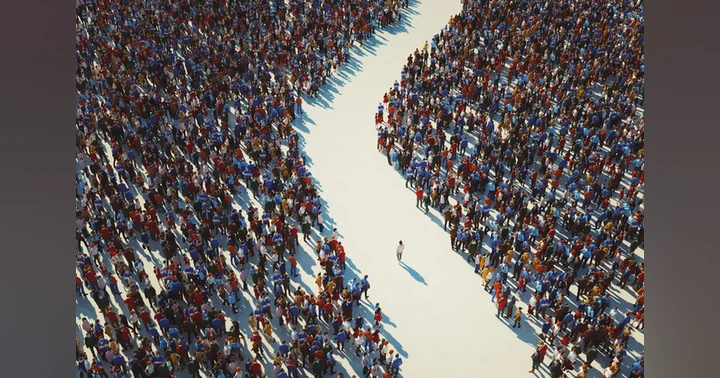
What the 2026 USC Global Communications Report Says About PR Today


That Solo Life Episode 342: What the 2026 USC Global Communications Report Says About PR Today
Episode SummaryKaren and Michelle open with a question that lands before the intro music fades: When was the last time a client approved a statement without pushback? The answer tells you everything about the communications environment right now and so does the report they spend this episode unpacking. The USC Annenberg Center for Public Relations 2026 Global Communications Report, titled A Quiet Shift, surveyed over 700 PR professionals, more than 1,000 members of the general public, and conducted one-on-one interviews with Fortune 500 chief communications officers. Karen and Michelle read it with the solo and independent practitioner in mind and pull three findings that are immediately relevant to how you counsel clients, frame messages, and navigate a landscape that has shifted more dramatically in two years than many expected. A fourth and fifth finding will be covered in a future episode, and in an exclusive YouTube behind-the-mic segment, the co-hosts announce at the close.
Episode Highlights- [03:01] The Perception Gap — You Feel It More Than Your Clients Do: The report identifies a meaningful gap between how PR professionals perceive the current environment and how the general public does. 81% of PR professionals say polarization is extremely or very high right now — but only 69% of the general public agrees. That 12-point gap has practical implications for how practitioners advise clients. Karen asks the key question: are you advising clients based on your own anxiety about the landscape, or are you exercising the restraint that meets your audience where they actually are? The solo advantage here is real — without agency layers and group dynamics amplifying collective anxiety, solos have more room to reality-test their instincts before they become strategy.
- [08:52] Corporate Social Advocacy Has Retreated — Sharply and Fast: The data on this one is stark. In 2023 and 2024, 89% and 85% of PR professionals respectively, said companies have a responsibility to advocate for social issues. By 2026, that number has dropped to 55%. The general public sits even lower at 42%. The drop took two years. For practitioners working with nonprofits, purpose-driven brands, or clients whose missions touch social issues, the wind is no longer at your back — but it hasn't stopped blowing. The shift is not uniform: 6 in 10 Gen Z and 7 in 10 millennial PR professionals still hold this belief. Understanding your client's audience generation is now essential to calibrating how hard to push on purpose-driven messaging.
- [14:55] The Content That Disappeared After the 2024 Election — and What Replaced It: Using exclusive data from Cometrics.io, the report analyzed LinkedIn posts from 6,317 C-suite executives at Fortune 500 companies across a six-month window before and after the November 2024 election. The volume of communication stayed the same. The topics shifted dramatically. AI and agents content rose 75%. Cybersecurity up 29%. Technology ethics up 27%. On the other side: LGBTQ+ content dropped 77%. Greenhouse gas content down 50%. Net zero down 44%. DEI content down 13% — though Karen and Michelle both note that number is likely understated by now. A separate Meltwater analysis of media coverage tracked the same pattern. The practical implication: if your clients have content in the declining categories, the framing strategy has to change. The story doesn't stop — but how you tell it does.
- [20:08] What Solo PR Pros Do With This Information: Karen and Michelle close with the practitioner application: if a client's content falls in the declining categories, you don't stop. You reframe. You spend more time at the strategy table. You adjust how the message lands without abandoning who the client is. Michelle's reminder: your voice as a practitioner is still your voice. You navigate circumstances — you don't abandon your position. And if a client's business includes a credible AI story, tell it. If they aren't, others are telling it for them.
Coming up: Karen and Michelle will cover additional findings from the USC report in an exclusive behind-the-mic YouTube segment for deeper discussion.
Resources & Additional Information- USC Annenberg Center for Public Relations — 2026 Global Communications Report: A Quiet Shift: annenberg.usc.edu/cpr
- Cometrics.io: cometrics.io
- Meltwater: meltwater.com
- Solo PR Pro membership community: soloprpro.com
- That Solo Life podcast website: thatsololife.com
That Solo Life is a podcast created for public relations, communication, and marketing professionals who work as independent and small practitioners. Hosted by Karen Swim, APR, President of Solo PR Pro, and Michelle Kane, Principal of Voice Matters, the show delivers expert insights, encouragement, and practical advice for solo PR pros navigating today's dynamic professional landscape.
Listen to all episodes and catch up on previous conversations at thatsololife.com.
Did this episode inspire you? If you found value in this conversation, please take a moment to leave us a review https://www.thatsololife.com/rate/. Your feedback helps us reach more solo pros just like you! Don't forget to subscribe so you never miss an episode.
Karen Swim [00:18 – 00:38]:
Here's a question for you, Michelle. When was the last time that you drafted a statement for a client, sent it to them, and they just said yes? No let's sit on this. No, actually can we just say nothing?
Michelle Kane [00:42 - 00:49]:
Never. I don't think, no. Okay, it's been a long time. It's been a long time, Karen.
Karen Swim [00:49 – 00:58]:
I mean, and I'll say that that tells you everything about the communications environment right now. Welcome back to that Solo Life, everybody.
Michelle Kane [01:00 – 01:44]:
Hey, everybody, thanks for joining us for this episode of that Solo Life. You know it. You hopefully love it. It's the podcast for PR pros, marketers, and communicators who work for themselves. People like me, Michelle Kane with Voice Matters and my wonderful co-host, Karen Swim of Solo PR Pro.
Hi, Karen. So, yeah, it's wild out there, right? So everybody, this episode, we're getting into a report that, you know, honestly, the moment I started reading it, I had to put it down and kind of have a moment, you know, not because it was bad, but because it had a lot of things that were very on point and kind of made you go oof.
Karen Swim [01:45 – 02:20]:
Yeah. So it's USC's, their Center for Public Relations, it's their 2026 Global Communications Report. It's called a quiet shift. And we'll link to the full study in our show notes. And they surveyed over 700 PR professionals, over 1,000 members of the general public, and they also conducted some one-on-one interviews with Fortune 500 chief communications officers. So, the thing is rich with data.
Michelle Kane [02:20 – 02:54]:
Yeah, it is, it is. And you know, we know. We say this all the time – they only talk to the big agencies; tools are only made for big agencies. Well, that's fine. We find a way. And so, we're looking at this report with you, the solo practitioner in mind, you know, the independent comms person like Karen and I, who are just trying to serve our clients well, and what is currently; well, I guess it's always a complicated environment, but even more so these days. And there is really some good actionable stuff in here that we want you to hear.
Karen Swim [02:55 – 02:58]:
Yeah, yeah, let's. You want to get into some of.
Michelle Kane [02:58 – 03:00]:
Let's get into it. Okay, man.
INSIGHT #1: YOU FEEL IT MORE THAN YOUR CLIENTS DO — AND THAT'S ACTUALLY A PROBLEM
Karen Swim [03:01 – 03:44]:
So, here's the first thing that kind of jumped out, right? You, you solo PR pro, you, professional communicator, you feel it more than your clients do, and that's actually a problem.
So, this one for me, like Michelle and I, when we first looked at this report, this is something that we had talked about in the green room, it says that this report reveals a, what it calls a perception gap. And so according to the report, 81% of PR professionals say polarization is extremely high or very high right now. But only 69% of the general public agrees with that.
Michelle Kane [03:45 – 04:22]:
Yeah, and that's, you know, what's that, 12 points? That's wild. And you know that could be the reason why we seem to be more sensitive to things out there. Although I have another theory. It could just be that we're paying attention and others should too, wherever you land on that. But, you know, it is kind of our job to look out for the so-called landmines and be watchful for our clients. And that's why I think it's showing that professional communicators do approach these sensitive issues with more caution in a more heightened way.
Karen Swim [04:22 – 05:08]:
Yeah, for me, it brought up the point that PR people were more anxious than the people that we're actually communicating to. And I agree with you, Michelle, that could be for a lot of reasons. Number one, that's part of, you know, our makeup, that that's who we are. We're always looking around corners. We do tend to be more sensitive to, you know, shifts in the landscape, whether they're political, environmental, economic. We take in a lot of information. So, we're reviewing a lot of news every day. And so probably more than I want to say the average person, because again, it's part of our job to know things and that, that can be a hazard to our well-being too.
Karen Swim [05:08 – 05:42]:
So we've had to find ways to protect ourselves. But with more information, I think that that can heighten it. And then the fact that our job is to be aware of those things and take action on them makes us different. But here's where it gets really tricky. It's, are we advising clients based on the lens of how we feel about it or are we exercising the restraint that really kind of meets our audience where they are at?
Michelle Kane [05:43 – 06:27]:
That's a great point. I mean, the report certainly states that the American public does agree with the PR people. You know, the polarization is having a negative impact. It's just to what extent. Right?
And I think it is important for us to keep in mind, you know, yes, we may realize, you know, we think it's way up here, but that, but our job is to still meet our audiences where they are while trying to lead them to truth without being manipulative.
So that there's our, there's our goal, our conundrum, our Rubik’s Cube to solve, you know, and that that could contribute to the cautious attitude that we have or, you know, it definitely speaks to it.
Michelle Kane [06:27 – 06:33]:
And yeah, I think it's just something we need to keep in mind as we work with clients on these sensitive topics.
Karen Swim [06:33 – 07:12]:
Yeah, I agree. I mean, so I think, you know, for me, it's, you know, asking like, is it me or is it them? You know, is it, is this my anxiety? Are these the things that I am afraid of because of all that I'm seeing, hearing, reading, taking in? Or is my audience, my client’s audience that I'm communicating to? Are they here with me and do I need to dial it back and take a step back and look at it through their lens? And so, you know, I mean, it's a good checkpoint to make sure that we are not unconsciously bringing our own anxiety into the room.
Michelle Kane [07:13 – 07:14]:
Good times.
Karen Swim [07:16 – 07:18]:
One more thing for us to do, right?
Michelle Kane [07:20 – 08:09]:
We stressed out over not being stressed out. You know, I think it's a natural byproduct of the business because so much of our work is, you know, we're immersed in the online environment. Sometimes there's no avoiding things. You know, even when I'm working on social media for a client, you have to wait in there.
Next thing you know, you're like, oh, what? Wait, why'd I come in this room? Oh, wait, it's to do a post and an ad campaign focus. But, you know, again, I think because we're, you know, we're simmering in the juices, so to speak, whereas the general audience, we're trying to reach and we need to be sensitive, both conscious of that, sensitive to that, and again, just, you know, deal with it in. In a way that's ultimately most effective.
Karen Swim [08:09 – 08:51]:
Yeah, I love that. And I mean, it's actually an opportunity, right? I mean, this is the solo advantage. We get to reality test the fear before we advise our clients. I just think that we have, as solos, a lot more opportunity and autonomy to work these things out without all those other layers that come with working, you know, within a corporation.
So be aware of it and make sure that you're asking yourself those questions at checkpoints before you're delivering strategy. Make sure that you really are taking, you know, this extra layer into account as you're crafting messages for those audiences.
INSIGHT #2: THE FLOOR FELL OUT ON CORPORATE SOCIAL ADVOCACY — AND YOUR CLIENTS FELT IT TOO
Michelle Kane [08:52 – 09:31]:
So true. So true. All right, insight number two. The floor fell out on corporate social advocacy, and your clients felt it too, which is kind of a bummer. But, you know, it, and this comes; they provide some trend data that honestly is just freaking me out a little bit, but I'll be okay.
It's been tracking one question since 2023: do companies have a responsibility to advocate for or support social issues? Whereas some of us, as comms people might think that's just what you do when you're a good person or a good entity. Not just wanting my money.
Karen Swim [09:32 – 09:59]:
Yeah. And this, this one isn't very subtle. Right. So according to this report, in 2023 and 2024, almost nine in 10 PR professionals, so 89, 85% respectively, said companies have this responsibility. But that proportion dropped to just over half in 2025. And this year it sits at about 55%.
Michelle Kane [09:59 – 10:28]:
I mean, that's crazy that that's more than half if, you know, it's like a half drop. And these are the people who are supposed to be the most committed to this idea. And it only took two years. Of course, you know, thinking back 2023 to 2025, we can all think about all the things that have happened between now and then. And, you know, I'll give the companies the benefit of the doubt. They've had to swiftly switch priorities to deal with the dumpster fires of the day.
Karen Swim [10:28 – 11:13]:
But yeah, I mean, I think it's showing up though, right? It's showing up in how people feel about work, how workers are treated. You know, it plays into a lot of things. And I would say that this lack of responsibility and care plays into everything else that, that has, you know, happened since then.
But the other distressing thing, and I mean, you know, I, I guess this tracks that this is your audience, then you're going to play to what your audience really cares about, right? The general public. According to this report, only 42% of the American public shares the belief that corporations should be advocates in 2026.
Michelle Kane [11:13 – 11:14]:
So awesome.
Karen Swim [11:15 – 11:29]:
You know, less than half of people think it's a big deal. They don't care. And I wonder if that lack of care or not holding companies responsible is because. Is it hopelessness? Is it.
Michelle Kane [11:29 – 12:28]:
I think it could be overwhelm. You know, you're worried about paying your bills every month. I think, I would say 99% of us are in that boat, you know, and we're still clinging to some sort of normalcy.
So I think it's kind of an innate thing. But here’s the kicker. So those of us who are working with clients, who are nonprofits, who are, you know, cause driven entities, now you can point to the dollars and cents of it, of this is how supporting us truly matters, but it still, it doesn't make it any easier now because the wind has shifted so dramatically.
You don't have, you know, that wind at your back, so to speak, that maybe you did just a couple of years ago. And it could just go down to the very, you know, human notion of o, I gotta make sure I have enough before I hand anything over.
And I'm not saying that that's good or that people are good or bad for it. I think it's just human nature.
Karen Swim [12:28 – 12:51]:
Yeah, I mean, and there were some generational differences in the data. Right. So it was this belief that companies have a responsibility to address social issues, no surprise, is most strongly held by younger PR professionals. So 6 in 10 Gen Z and 7 in 10 millennials say companies have the responsibility.
Michelle Kane [12:52 – 13:29]:
I bet you Gen X does too. They just don't ask us. But okay, so seriously, what that does mean is if, you know, if you're serving younger founders or again, these mission driven brands, if you can hear my dogs, they're writing as well, you know, or if you're those whose audiences skew younger, that audience still does care deeply. And, you know, that's a good sign. There's, you know, the kids are all right, there's hope for the future. So the shift isn't uniform across every client type. And that matters a whole lot when you're giving counsel.
Karen Swim [13:30 – 14:42]:
Yeah, it does. I mean, I love that, you know, this means that for solos and, you know, for other communicators, it's a reminder to be nuanced in your communications and really, you know, understand deeply who is your audience. Because if you're speaking to a generation that cares about these things, then it's important to include those things in your messaging.
It's important to be really clear about the mission, the causes, the values, you know, how you serve. But if that's not your audience, it may be less important. So, you know, again, here's where being a solo, we are able to manage lots of different client relationships, lots of different audiences, and I think that that gives us a competitive edge because we play in a lot of different fields and so we understand those nuances and can advise, you know, in house agencies and or larger agencies that we might work alongside of who may have not be playing in all those spaces.
So, yeah, one more, you know, reminder of the breadth and depth of solo PR pros and how we truly can be a help.
Michelle Kane [14:42 – 14:47]:
Yeah, so true, so true. We have so many superpowers. All right,
Karen Swim [14:48 – 14:55]:
number three inside. And we'll share some more like in a blog post or something later. But I'm gonna cover three today.
INSIGHT #3: THE CONTENT THAT DISAPPEARED — AND WHAT REPLACED IT
Michelle Kane [14:56 – 15:49]:
Okay. I feel like Casey Kasem number three. We should have started with five. Anyway, the content that disappeared and what replaced it? Oh, it's like a murder mystery, only murders in the podcast. This one comes from some exclusive data that the report commissioned, and it is really interesting.
They worked with a company called Cometrics.io to analyze social media posts, including LinkedIn posts from 6317 (so precise) c-suite executives of Fortune 500 companies and they looked at a six-month window before and after the November 2024 election. Wow. What a choice. Yeah, yeah, yeah.
Karen Swim [15:49 – 15:56]:
And here's what the report said. It said communication didn't change, but the content did.
Michelle Kane [15:57 – 16:17]:
I am shocked. I wonder volume stayed the same. Yeah, right. It's like I wonder what could happen. Volume stayed, the topics shifted dramatically. And honestly, it's safe to say we saw the same behavior in 2020, right?
Karen Swim [16:17 – 16:18]:
Yeah, that's true.
Michelle Kane [16:18 – 16:45]:
Yeah. Now, according to the Cometrics status cited in the report, AI and agents’ content went up 75%. What a surprise. Cyber security was up 29%. Not a bad thing. We all need to be smart about that. And technology ethics were up 27%. Again, not a bad thing depending if you're into ethics or not but we do see some other changes in other types of content.
Karen Swim [16:45 – 17:26]:
Yeah, I feel like to some degree, if you want to be a contrarian, you know, that means there's opportunity for, you know, these other topics. Because people are, I think as of the recording of this podcast, growing weary of some of those topics. But in contrast, the things that dropped LGBTQ plus content dropped 77%. Greenhouse gases down 50% and net zero down 44%. Diversity and inequality down 13% and content about apprenticeship programs down 52%.
Michelle Kane [17:27 – 17:30]:
That DEI number sounds awfully low.
Karen Swim [17:31 – 17:36]:
I bet it's higher. Maybe it was like at the time. I bet it's a lot higher.
Michelle Kane [17:37 – 18:26]:
Yeah, yeah. And honestly, LGBTQ plus content dropping that to me sounds like just self-protection in this crazy world we live in. But the report also included a second analysis and that one was conducted by Meltwater.
And they looked at media coverage of U.S. fortune 500 companies and top tier national outlets and they did this over the course of 2023 to 2025 and they found that shocking AI became the dominant corporate theme post-election coverage on that went up 98%.
It's like suddenly the whole world decided, oh Is this here now? Yes, it is. And at the same time, you saw environmental themes and purpose led issue coverage decline sharply. So it's like we went, certain things went up and certain things went way down.
Michelle Kane [18:26 – 18:31]:
So it's, I don't know, are we just a bunch of squirrels looking at the latest shiny?
Karen Swim [18:32 – 19:35]:
Yeah, I think we are. And I know as community, we love, you know, we love a breadth of topics and you know, we love creativity and we, we've had to be locked into really understanding what's really going to get written about as we're pitching, as we're doing thought leadership. And it's, it's really skewed into these areas and sadly for the people who, you know, work in very specific aspects of communications, they've had challenges in, you know, getting their content seen.
So, yeah, you know, DEI, specifically this report referenced a 2025 study by ABC News that the coverage of DEI has shifted towards backlash, rollback and litigation stories. So that's, you know, again, there's content, but it's not the content that is positive content. It's about DEI, but in a negative way.
Michelle Kane [19:35 – 20:08]:
Right, right. It's not constructive or empowering or anything like that. So even though sadly, DEI isn't disappearing like you say, it's more about the alleged controversy of it and you know, the legalities that have, that have come to the fore. And that brings a completely different communication challenge to comms pros and it requires a totally different strategic approach. So again, solos. We know how to pivot. We know how to ride the waves. We've got a lot of waves we're riding right now, but we do.
Karen Swim [20:08 – 21:00]:
I mean, I think, you know, practically speaking, you know, as communicators, we know this, but you may have clients in these spaces and they're your client. You still need to serve them. And so you still need to address these topics. That doesn't mean that you stop. It means that your framing strategy has to change. And you can't pretend because that doesn't serve your client or their audiences.
You just have to really, you know, spend a lot more time at the strategy table and figuring out how to, how to deliver your messaging in an environment that is sort of turned against you. I mean, if you work for a company that's working on climate change, you know, technology or issues, or you work for nonprofits that are serving these other communities or, you know, whatever space your client is, people actually have businesses where this content is germane to who they are.
Karen Swim [21:01 – 21:05]:
You have to communicate that. But it's all in the framing.
Michelle Kane [21:06 – 21:20]:
Yeah. Yeah. And I think adding to that, you, your voice is going to be your voice no matter what. You know, you have to navigate the circumstances and situations, but you know, you're not going to so called change your story on.
Karen Swim [21:20 – 21:20]:
Yeah.
Michelle Kane [21:20 – 22:09]:
You know, just because of it. But you know, and also again, AI content is demanding a lot of attention, and you know, it's not a bad thing because we need to learn how to navigate it. It's not going away. So, you really need to make sure that your clients are telling a credible AI story if it pertains to their line of business, of course. And you know, if you're not, you're leaving a lot of opportunities on the table because if you aren't talking about it, others certainly are. So, if you have any means of expertise in it or surrounding it, you need to be talking about it. You know, it could be as much as tools to help your clients keep their books or
Karen Swim [22:09 – 22:09]:
Yeah.
Michelle Kane [22:09 – 22:32]:
However it applies. So, you know, and again, we'll come back to our pivot. Where's Ross? Solos. We're allowed. We pivot with the best of them, and you know, clients should be thrilled to have us to help lead the way through this maze we're living in right now. But. Yep. So those were three of the findings.
Michelle Kane [22:32 – 22:36]:
We're going to come back in another episode with more findings.
Karen Swim [22:37 – 22:49]:
We hope you have this as a special. I mean we're just, I just thought of this in the moment. So. Okay, this as a special exclusive YouTube behind the mic and we'll go over a couple.
Michelle Kane [22:49 – 22:50]:
I love that.
Karen Swim [22:50 – 23:30]:
Yeah, stay tuned for that. And we'll make sure to let our listeners know that I, I think, you know, Michelle, we want to hear from our listeners - how support lands for them. Definitely, you know, take some time to read. It does have some interesting insights in their data backed and I believe that information is power for us.
You know, if we know, then we can use that and we can leverage that in our strategic council and how we craft things. And so, yeah, you know, we cover this annual report; I think we've done this for the past couple of years because there's, you know, it's about our industry.
Michelle Kane [23:31 – 23:31]:
Yeah.
Karen Swim [23:31 – 23:39]:
And so we love to see, you know, what the survey says about how we're doing our work, and we hope, you know, that it was helpful.
Michelle Kane [23:39 – 24:32]:
Yeah, hopefully. And here's one takeaway look at one client relationship and just check yourself, see whether your anxiety about a certain issue that pertains to them is mostly your anxiety, or is it that you know, or is it something that their audience should be concerned with? So. And we'd love to hear from you, hit us up at soloprpro.com or the new website home for our podcast thatsololife.com. we'd love to hear your feedback, even if you pop it in a Google review. And until next time, thanks for listening to that. Solo Life.
Resources/Sources Mentioned:
Source: USC Annenberg Center for Public Relations, 2026 Global Communication Report: A Quiet Shift (March 2026)
Survey of 704 PR professionals fielded December 2, 2025 – January 12, 2026
Survey of 1,011 U.S. general public respondents fielded January 9–11, 2026
Cometrics.io data: Analysis of social media posts from 6,317 C-level executives at Fortune 500 companies, six-month window before and after the November 2024 election
Meltwater data: Analysis of media coverage of U.S. Fortune 50 companies in top-tier national outlets, 2023–2025
Full report available at annenberg.usc.edu/cpr
A question to sit with after this episode:
The report shows 91% of PR professionals believe polarization has increased the importance of their role — yet many are advising clients to say less, engage less, and retreat from social issues. How do you personally reconcile those two realities in your own practice? And are you charging accordingly for counsel that is now genuinely harder to give?